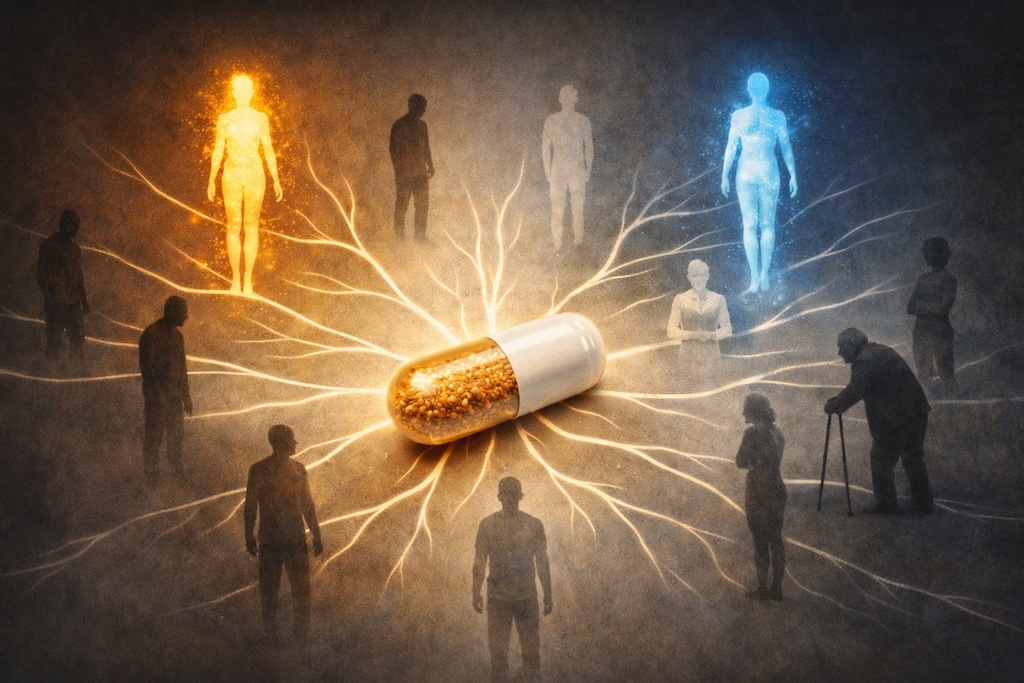
Not All Probiotics Are Right for Everyone
In recent years, probiotics have gained an almost mythical reputation. Walk into any pharmacy, scroll through any wellness feed, or listen to any health podcast and the message is the same: probiotics are the answer. It's as if they were a magic button you press and suddenly your gut, digestion, immune system, mood—and perhaps your life in general—are all fixed. The global probiotics market, now valued at roughly $75–90 billion and projected to more than double within the next decade, reflects that enthusiasm. Consumers are buying in at an extraordinary rate, often without fully understanding what they are putting into their bodies or why.
The reality, however, is much simpler and at the same time far more interesting than the marketing would suggest.
Your Gut Is as Unique as a Fingerprint
Not everyone's gut is the same. In fact, no two guts on earth are identical. The human gastrointestinal tract harbours over 3,000 bacterial species distributed across fewer than 130 genera, with the vast majority of diversity concentrated at the species and strain levels. Each individual carries somewhere between 2,600 and 3,300 species at any given time, forming a microbial ecosystem so distinctive that researchers have demonstrated it can identify a person as reliably as a fingerprint. A landmark study published in the Proceedings of the National Academy of Sciences using data from the Human Microbiome Project showed that over 80% of individuals could be uniquely identified from their gut microbiome alone, even up to a year after the initial sampling. A Stanford Medicine study tracking 86 people over six years confirmed that the most persistent bacteria in each person's microbiome were those most particular to the individual, not those commonly shared across the population.
This microbial fingerprint is shaped by a remarkable constellation of factors. How you were born—vaginal delivery versus caesarean section—seeds the very first bacterial colonies you encounter. What you ate as a child, particularly whether you were breastfed, establishes the foundation of your early microbial community. How many rounds of antibiotics you have taken over a lifetime determines which populations have been periodically decimated and which have had the opportunity to rebound. How you live today—your diet, your stress levels, your sleep patterns, your physical activity, even the altitude at which you live—continuously sculpts and reshapes that inner ecosystem. The gut microbiome is not a static entity. On shorter timescales of days and weeks, considerable variation can occur, while over months and years, the community tends to remain more stable, unless perturbed by external forces such as illness, medication, pregnancy, or radical dietary change.
So, taking the same probiotic simply because "it's good" is a bit like everyone wearing the same shoe size and expecting it to fit. The logic doesn't hold. Your internal landscape is profoundly personal, and what it needs depends on what it already contains, what it's missing, and what challenges it currently faces.
Why the Same Probiotic Works for Some and Not for Others
There are people who feel noticeably better within a few days of taking specific probiotics. Less bloating, more regular bowel movements, improved energy, even a brighter mood. But there are others who experience the opposite—more gas, a heavy feeling in the stomach, persistent discomfort, or simply no discernible change at all. And that doesn't mean the probiotic is bad. It means it's not the right one for that particular body, at that particular moment.
This variability is not surprising when you understand the underlying biology. The introduction of probiotic microorganisms into the human gut aims to promote a more beneficial microbial balance. But their successful colonisation and integration within the existing ecosystem depend on a complex interplay between the incoming strains, the resident microbiota, the host's immune system, and the environmental conditions within the gut itself. Large-scale introduction of foreign probiotic strains may even exert selective pressure on the native microbiota, potentially disrupting communities that were already functioning reasonably well. This is why a one-size-fits-all approach carries inherent limitations.
Emerging research in personalised probiotic therapy is beginning to address this problem. Advances in microbiome profiling, metabolomics, and metatranscriptomics now allow scientists to select specific probiotic strains that produce targeted metabolites—such as short-chain fatty acids—tailored to an individual's genetic, metabolic, and microbial profile. Next-generation probiotics and live biotherapeutic products, designed for enhanced specificity and function, represent a significant step beyond the generic supplements that currently dominate pharmacy shelves. In India, at least one company has already launched the country's first personalised probiotic and prebiotic combination, formulated by hand based on an individual's unique gut profile. The era of precision probiotics is not a distant prospect. It is already arriving.
The Critical Importance of Strain Specificity
One of the most misunderstood aspects of probiotics is that not all strains do the same thing. The term "probiotic" encompasses an enormous range of organisms—primarily species within the Lactobacillus (recently reclassified into genera such as Lactiplantibacillus, Lacticaseibacillus, and Limosilactobacillus) and Bifidobacterium families, as well as the yeast Saccharomyces boulardii. But within these broad categories, individual strains have highly specific properties, and the clinical evidence supporting them varies dramatically.
Consider how different the applications are even among well-studied strains. Lactobacillus rhamnosus GG, one of the most extensively researched probiotics in the world, has strong clinical evidence for preventing and treating antibiotic-associated diarrhoea, particularly in children. Saccharomyces boulardii, a beneficial yeast, has demonstrated efficacy in preventing diarrhoea in patients with feeding tubes and treating acute diarrhoea in infants and children. Meta-analyses have confirmed the strain-specific efficacy of both organisms in addressing antibiotic-associated gut disruption, and when used in combination, research suggests they may exert synergistic effects—boosting short-chain fatty acid production and reducing pathogenic bacteria more effectively together than either does alone. Meanwhile, Bifidobacterium infantis 35624 has shown specific promise in reducing symptoms of irritable bowel syndrome over an eight-week course. Bifidobacterium longum BB536, when mixed with milk or yogurt, has been shown to increase bowel movement frequency in adults prone to constipation. And for inflammatory bowel disease, formulations combining Lactobacillus and Bifidobacterium species have shown the most favourable clinical results, though the evidence remains preliminary due to small sample sizes and inconsistent study designs.
The point is that taking a "general-purpose" probiotic without knowing what you actually need is essentially a gamble. It might work. It might not. It might even make things worse. The strain matters. The dosage matters. The clinical evidence behind the specific product you choose matters enormously.
The Gut-Brain Connection: Where Probiotics Meet Mood
Perhaps the most fascinating frontier in probiotic research is the gut-brain axis—the bidirectional communication pathway linking the gastrointestinal tract and the central nervous system. The gut microbiome participates in the synthesis and release of neurotransmitters and hormones that directly modulate brain function, including serotonin, dopamine, and gamma-aminobutyric acid (GABA). This has given rise to the concept of "psychobiotics"—specific probiotic strains that confer mental health benefits through their interaction with gut bacteria and the nervous system.
The science here is genuinely compelling, if still maturing. A 2025 randomised, double-blind, placebo-controlled study in 88 healthy volunteers found clear evidence that a multispecies probiotic reduced negative mood starting after just two weeks of daily use, based on daily monitoring—an effect that traditional pre-versus-post assessment methods had failed to reliably detect. Clinical trials with Lactobacillus helveticus R0052 and Bifidobacterium longum R0175 demonstrated significant reductions in depression scores and measurable decreases in the stress hormone cortisol. In athletes, Lactobacillus casei Shirota reduced cognitive state anxiety, somatic symptoms, and perceived stress over an eight-week supplementation period. Even in the domain of neurodegenerative disease, a 2025 randomised clinical trial showed that a four-strain probiotic could beneficially enrich the gut microbiota, reduce systemic inflammation, and alleviate non-motor symptom burden in Parkinson's disease patients experiencing constipation.
These findings are exciting, but they also underscore the original point: strain specificity is everything. Not just any probiotic will influence your mood or stress response. The mechanisms—vagal nerve signalling, short-chain fatty acid production, GABA synthesis, modulation of the hypothalamic-pituitary-adrenal axis—are strain-dependent. A probiotic formulated for digestive regularity may do nothing at all for anxiety. One designed to support immune function may not touch your sleep. The biological pathways are distinct, and so the interventions must be as well.
Timing and Context Are Everything
Your probiotic needs are not fixed. They shift with the circumstances of your life, and what serves you well during one period may be irrelevant or even counterproductive during another.
During a course of antibiotics, the gut microbiome sustains significant collateral damage. Antibiotics do not discriminate between pathogenic and beneficial bacteria. They sweep through the ecosystem, reducing short-chain fatty acid production and depleting populations of key species like Bifidobacterium and Akkermansia muciniphila. This is precisely the context in which strains like L. rhamnosus GG and S. boulardii have the strongest supporting evidence—they can help restore microbial diversity and functionality during and after antibiotic treatment.
During a period of intense psychological stress, the gut-brain axis becomes particularly relevant. Stress alters the composition and function of the gut microbiome, increases intestinal permeability, and elevates inflammatory markers. In this context, a psychobiotic formulation targeting neurotransmitter pathways may be more appropriate than a general digestive support product.
When you are trying to lose weight, recovering from surgery, managing a chronic condition, or simply trying to maintain overall wellness, the demands on your gut ecosystem are different each time. The same probiotic that helped you last year might not do anything for you this year, because your microbiome has changed, your circumstances have changed, and your body's priorities have shifted.
Sometimes, the Gut Doesn't Need More Bacteria
Here is something that is rarely mentioned in the marketing literature. In some cases, the gut doesn't need more bacteria at all. It needs calm first—a better diet, less processed sugar, less alcohol, more fibre from whole plant-based foods, and better sleep. Research consistently shows that dietary patterns profoundly influence gut microbial diversity. Populations consuming traditional, plant-rich diets tend to harbour more diverse bacterial communities than those eating typical Western diets, and there is evidence that healthier individuals tend to have more diverse microbial populations overall. When non-Western populations migrate to the United States, for example, studies have documented a measurable decrease in their gut microbial variety, suggesting that the dietary and lifestyle shifts associated with Westernisation actively reduce the richness of the inner ecosystem.
If the foundational conditions are wrong—if the diet is poor, if sleep is chronically disrupted, if alcohol consumption is excessive, if stress is unmanaged—then layering a probiotic supplement on top is unlikely to produce the dramatic results that the packaging promises. The probiotic may survive the journey through stomach acid, it may even temporarily colonise parts of the intestinal tract, but it will be operating within an environment that is not conducive to its success. It's the equivalent of planting seeds in parched, nutrient-depleted soil and expecting a lush garden.
The gut microbiota responds to its environment. Perturbations including age, diet, pregnancy, physical activity, stress, disease, smoking, medication, and even altitude all influence its composition. Addressing these upstream factors first creates the conditions under which probiotics can actually do their job.
Regulation Lags Behind the Market
There is another dimension to this conversation that consumers rarely consider: regulatory oversight of probiotics is considerably weaker than that of conventional pharmaceuticals. Standards and regulations vary significantly across different regions, and the complexities of substantiating health claims through clinical trials create a fragmented global landscape. A product sitting on a pharmacy shelf may contain well-researched strains backed by rigorous clinical data, or it may contain strains with very little evidence behind them at all. They look the same on the outside.
Recognising this problem, the University of Reading in 2025 launched the first evidence-based probiotic guide, a free-to-access database designed to help healthcare professionals and consumers match specific probiotic strains to individual health conditions. The guide includes only products meeting stringent criteria: commercial availability, strains recognised as safe by regulatory authorities including the European Food Safety Authority, and published clinical evidence for the specific strains and combinations used. It is a small but important step toward bringing clarity to a market where marketing often runs far ahead of the science.
Probiotics Are a Tool, Not a Miracle
Probiotics are neither a fad nor a magic bullet. A comprehensive analysis of nearly 300 meta-analyses published between 2000 and 2020 on the effects of probiotics in the prevention and treatment of diseases found that probiotics were effective approximately 79% of the time. That is an impressive track record—but it also means that in roughly one in five cases, they were not effective, and the reasons likely relate to the very issues explored here: wrong strain, wrong timing, wrong context, or underlying conditions that needed to be addressed first.
The global probiotics industry is undergoing a transformation. The merger of major ingredient companies, the rise of AI-enabled personalisation platforms, and the growing body of strain-specific clinical research are all pushing the field toward greater precision and accountability. Consumers, too, are becoming more sophisticated, increasingly seeking condition-based products rather than generic supplements.
But the fundamental lesson remains the same. Probiotics are a tool. And like any tool, when selected carefully, used at the right time, in the right context, and for the right purpose, they can do remarkable work. When used haphazardly—grabbed off a shelf because the label looked convincing or a friend recommended them—they just take up space in the cupboard. Your gut deserves better than guesswork. It deserves an approach as individual as the trillions of microorganisms that call it home.