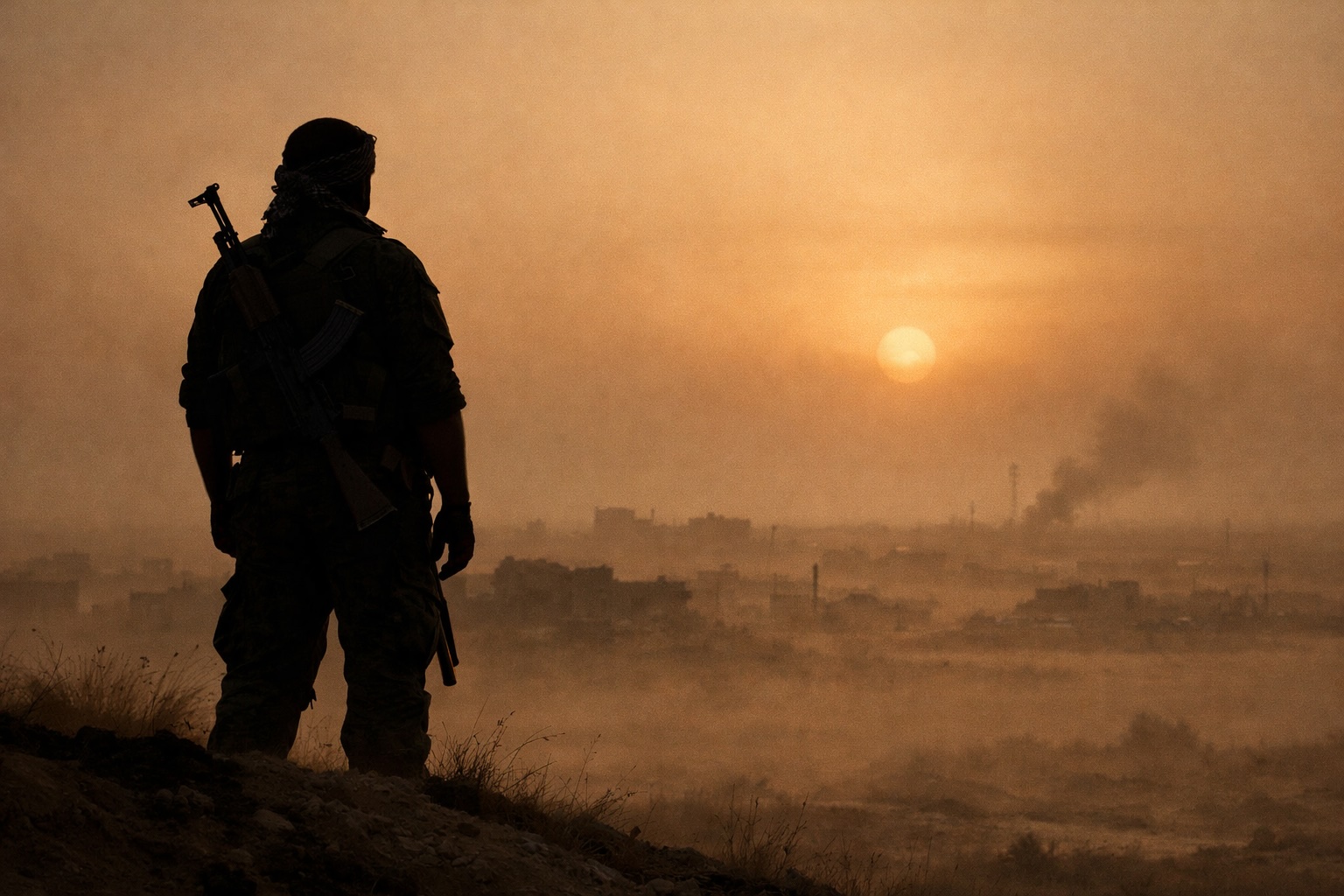
US Abandons Syrian Kurds: Washington Backs Damascus as SDF Forces Surrender
A Familiar Pattern of Betrayal
For decades, the Syrian regime kept the Kurds marginalized, systematically suppressing their cultural identity, political rights, and aspirations for autonomy. However, during the brutal civil war that tore Syria apart beginning in 2011, the Kurds found an unlikely opportunity. They allied themselves with the United States against ISIS, becoming Washington's most effective ground force in the campaign to destroy the self-proclaimed caliphate. After Assad's fall and Ahmed al-Shara's rise to power in late 2024, the Kurds believed that their sacrifices—thousands of fighters killed, years of loyal partnership—meant Washington would continue to support them.
On Tuesday, they were proven catastrophically wrong.
The Collapse of Kurdish Leverage
Syrian President Ahmed al-Shara gained almost everything he sought through the agreement signed last Sunday with Mazloum Abdi, the leader of the Syrian Kurds and commander of the Syrian Democratic Forces (SDF), which had controlled much of the country's resource-rich northeastern territory for nearly a decade. However, the very next day, fresh clashes erupted between Damascus's troops and the Kurdish-led militia, demonstrating just how fluid and volatile the situation in the region remains.
Finally, on Tuesday afternoon, the Syrian government announced a new ceasefire, giving the Kurds just four days to agree to place their civil and military structures under the official control of Damascus—effectively an ultimatum demanding complete capitulation.
These developments represent a critical test for President al-Shara at a time when his government is struggling to impose full control over Syria's fractured territory. The ongoing tension highlights the immense difficulties of reuniting Syrian lands under a central authority after fourteen years of civil war, from whose horrors the country emerged deeply divided along ethnic, religious, and political lines.
However, it is the Kurds who find themselves with their backs against the wall, facing the prospect of losing everything they built during the chaos of war.
The End of Negotiations: Military Pressure Succeeds Where Diplomacy Failed
Throughout 2025, al-Shara maintained constant consultation with Kurdish leaders on the terms of their integration into the new Syrian state. The Kurds entered these negotiations holding strong cards: long-standing support from the United States, battle-hardened fighters who had proven themselves against ISIS, and crucially, control of Syria's most significant oil and natural gas reserves in the Deir ez-Zor region. In this context, many Syrians—and international observers—saw these talks as a harbinger of broader changes aimed at including minorities in governance and sharing political power in a post-Assad Syria.
But this month, the Syrian president's patience ran out.
After months of deadlock in negotiations with the Syrian Democratic Forces, Damascus launched a decisive military offensive against Kurdish territories last week. Within days, government forces reached the outskirts of Raqqa—the largest city under Kurdish administration and the former de facto capital of the ISIS caliphate—following a series of Kurdish defeats on the battlefield. The speed of the government advance shocked observers who had expected the SDF to mount stiffer resistance.
By Sunday, SDF leader Mazloum Abdi was forced to accept an agreement which, according to several analysts, amounts to unconditional surrender.
The terms were devastating. The SDF lost almost all the concessions that the government had been willing to make in previous rounds of negotiations. While Kurdish negotiators had initially secured the right to join the Syrian army as separate, ethnically-cohesive battalions—preserving some degree of autonomous military identity—Kurdish fighters are now required to integrate individually, dissolving their command structure entirely. Simultaneously, the SDF surrendered control of energy sources, which had been their primary economic and political leverage.
The American Betrayal: A Pattern Repeated
For decades, the Syrian regime kept the Kurds on the sidelines, suppressing their language, denying them citizenship, and crushing any expression of Kurdish nationalism. During the civil war, the Kurds allied themselves with the United States against ISIS and, after Assad's fall and al-Shara's seizure of power, believed their partnership would endure.
Instead, they suffered a devastating blow when, on Tuesday, U.S. Special Envoy for Syria Thomas Barrack announced that Washington had effectively replaced the SDF with al-Shara's government as its partner in the fight against terrorism.
"The SDF's original role as the main force against ISIS has been completed, as Damascus is now willing and ready to take on security responsibilities," he wrote in a post on X, arguing that "the greatest opportunity for the Kurds in Syria at this moment lies in the transition process under the new government headed by President Ahmed al-Shara."
The statement was remarkable for its clinical dismissal of years of partnership and Kurdish sacrifice. Approximately 11,000 SDF fighters died in the campaign against ISIS—a debt Washington apparently considers paid in full.
Kurdish Accusations and the Breakdown of Trust
Kurdish leaders have long accused the al-Shara government of concentrating power within a closed circle of loyal associates from his days fighting the Assad regime, and of failing to meaningfully include minorities in governance. The new Syrian administration, they argue, represents merely a change of faces at the top rather than a fundamental transformation of Syria's political system.
On Monday, Kurdish officials accused government forces of violating the agreement announced just twenty-four hours earlier, repeating their demand for al-Shara to decentralize power in a seemingly desperate, last-ditch effort to regain some of the concessions they had previously won.
The situation deteriorated further on Tuesday when Islamic State fighters escaped from prisons and their family members fled from detention camps as Kurdish forces abandoned their positions under military pressure. The security implications are profound: the SDF had been holding approximately 10,000 ISIS fighters and tens of thousands of their family members in facilities across northeastern Syria. The potential for a resurgence of the group—the very threat that justified American partnership with the Kurds in the first place—appears to concern Washington far less than maintaining relations with Damascus.
Both government and Kurdish officials spoke of a complete breakdown in talks, but on Tuesday afternoon, the government announced a four-day ceasefire. The Kurds committed to abide by it and declared their readiness to implement the January 18 agreement—effectively accepting their defeat.
A Warning to Syria's Other Minorities
This development, as well as the initial agreement itself, sends an unmistakable message to other Syrian minorities, including the Druze who control the province of Suwayda in southern Syria and the Alawites concentrated along the Mediterranean coast—the same community that formed the backbone of Assad's regime.
"This is a significant territorial, military, and political victory for al-Shara," noted Daryn Khalifa, senior advisor at the International Crisis Group. "The political message is that for everyone else, it's just a matter of time."
The implications are clear: Damascus intends to reassert central control over all Syrian territory, and minorities who resist will face the same military pressure that brought the Kurds to heel. The window for negotiating favorable terms appears to be closing rapidly.
President al-Shara has pledged that his government will protect the rights of all minorities, with the international community serving as an observer and implicit guarantor. In a gesture toward the Kurds, al-Shara issued a decree last Friday recognizing Kurdish as a national language alongside Arabic—a symbolic concession that costs nothing and changes little about the fundamental power dynamics.
America's "Miscalculation"—Or Strategic Abandonment?
The agreement was, of course, overshadowed by the role of the United States, a long-standing ally of the SDF and an essential partner in their campaign to drive the Islamic State out of northeastern Syria beginning in 2015. American airpower, intelligence, and special operations support transformed the Kurdish militia into an effective fighting force capable of taking and holding territory.
Over the past year, tensions between Damascus and the SDF placed Washington in an increasingly difficult position as it attempted to balance between its two Syrian partners. While the United States continued to provide support to Kurdish forces after Assad's collapse in late 2024, the Trump administration simultaneously embraced Ahmed al-Shara as the legitimate leader of Syria's transition.
Last November, President Trump welcomed the Syrian leader to the White House—a remarkable diplomatic turnaround for a man previously designated a terrorist by Washington due to his past leadership roles in al-Qaeda-affiliated groups. The U.S. president subsequently suspended American sanctions against Syria that had devastated its economy, providing the new government with desperately needed relief.
The SDF viewed their American allies as a bulwark against precisely the kind of military operation Damascus launched last week. This assessment proved to be, in the words of one analyst, "a miscalculation"—though a more cynical interpretation might characterize it as wishful thinking about American commitment.
Although U.S. officials helped mediate the agreement, the Kurds received neither the military support they had hoped for nor even significant international criticism of the government's offensive. No American aircraft intervened; no statements condemned Damascus; no diplomatic pressure was applied on their behalf.
Some Kurds likened the American stance to a complete abandonment of a long-time ally—a betrayal that echoes previous American desertions of Kurdish partners in Iraq in 1975, 1991, and most recently in 2019 when Trump withdrew forces from northern Syria, allowing Turkish military operations against Kurdish positions.
"The United States left the Kurds, their allies, between the fists of ISIS and al-Qaeda," said Siamed Ali, a spokesman for the SDF—a pointed reference to al-Shara's origins in jihadist movements before his purported transformation into a pragmatic nationalist leader.
Washington's New Priorities
During a press conference in Washington, President Trump appeared to firmly support Ahmed al-Shara, saying that the Syrian leader "works very hard" and confirming discussions about the facilities holding Islamic State fighters in northeastern Syria. The president added that Washington "is also trying to protect the Kurds"—a claim that rings hollow given the administration's unwillingness to take any concrete action on their behalf.
Trump also spoke by phone with Turkish President Recep Tayyip Erdogan about developments in Syria. Ankara, a key supporter of the al-Shara government and a longtime adversary of Syrian Kurdish forces (which it views as an extension of the PKK terrorist organization), has been pushing for the elimination of Kurdish autonomy.
Following the call, Erdogan stated bluntly that Kurdish forces in northern Syria must lay down their arms and disband immediately to prevent further bloodshed—a demand that amounts to calling for their complete destruction as a political and military force.
The Broader Implications
The abandonment of the Syrian Kurds carries implications far beyond the immediate crisis. For American allies and partners worldwide, it reinforces a troubling pattern: the United States may be an essential partner in times of war, but its commitment evaporates when strategic calculations shift.
For Syria, the rapid reassertion of central authority suggests that al-Shara's government is more capable and determined than many observers initially believed. The ease with which Kurdish forces collapsed—despite years of American training and support—raises questions about the durability of any armed opposition to Damascus.
For the Kurds themselves, the situation represents yet another chapter in a long history of disappointment. Having bet on American partnership as their route to autonomy or at least protected minority status within Syria, they now face absorption into a state led by former jihadists, with only vague international assurances about minority rights.
The Kurdish question in Syria is not resolved—it is merely suppressed. Whether al-Shara can maintain control over resentful populations in the northeast, whether ISIS can exploit the chaos to reconstitute itself, and whether the Kurds will accept their diminished status or eventually rebel again remain open questions.
What is certain is that when the next crisis comes, the Kurds will remember how Washington treated them when they needed support most.